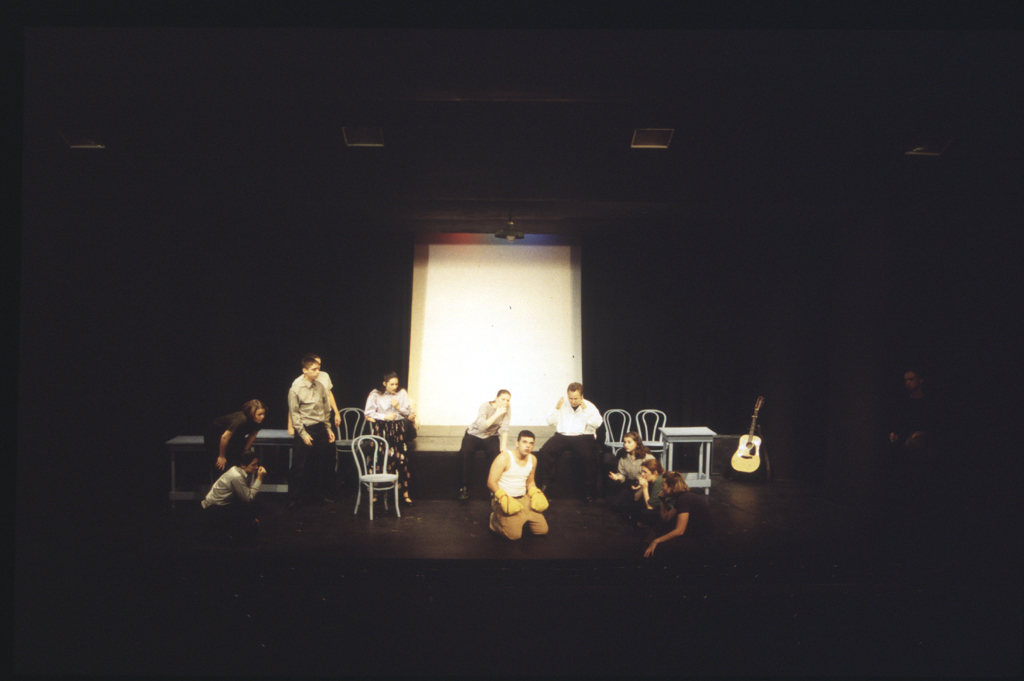
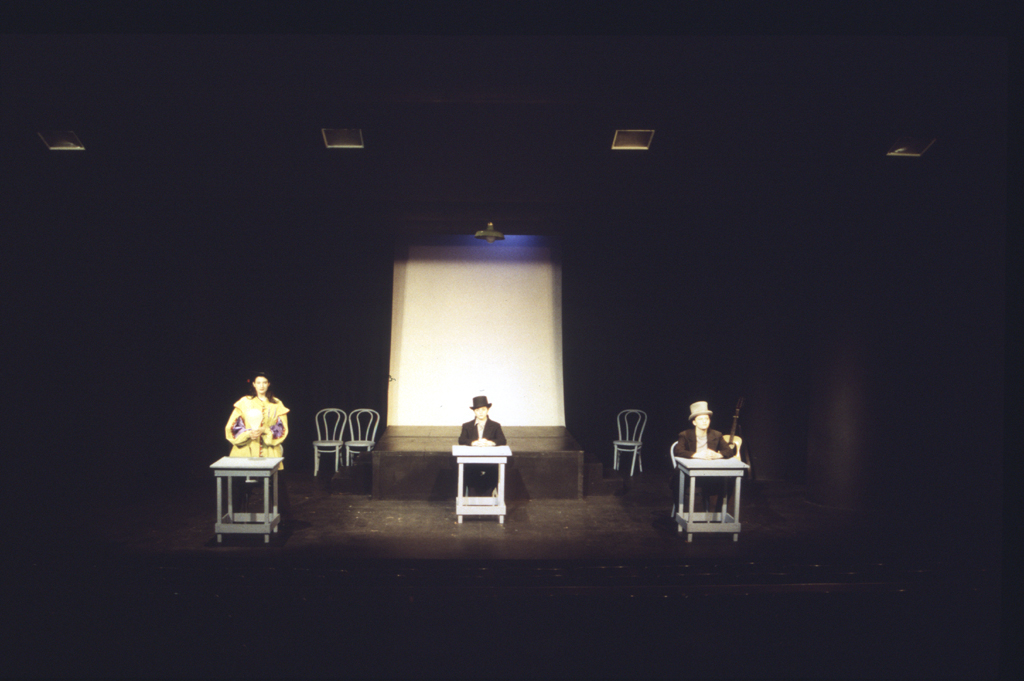
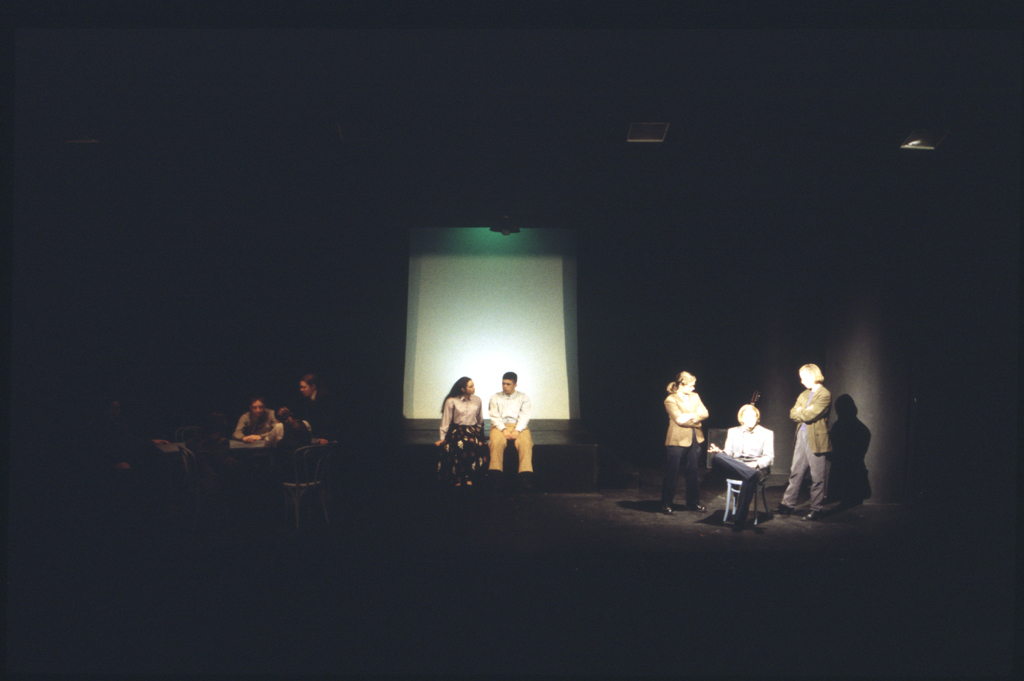
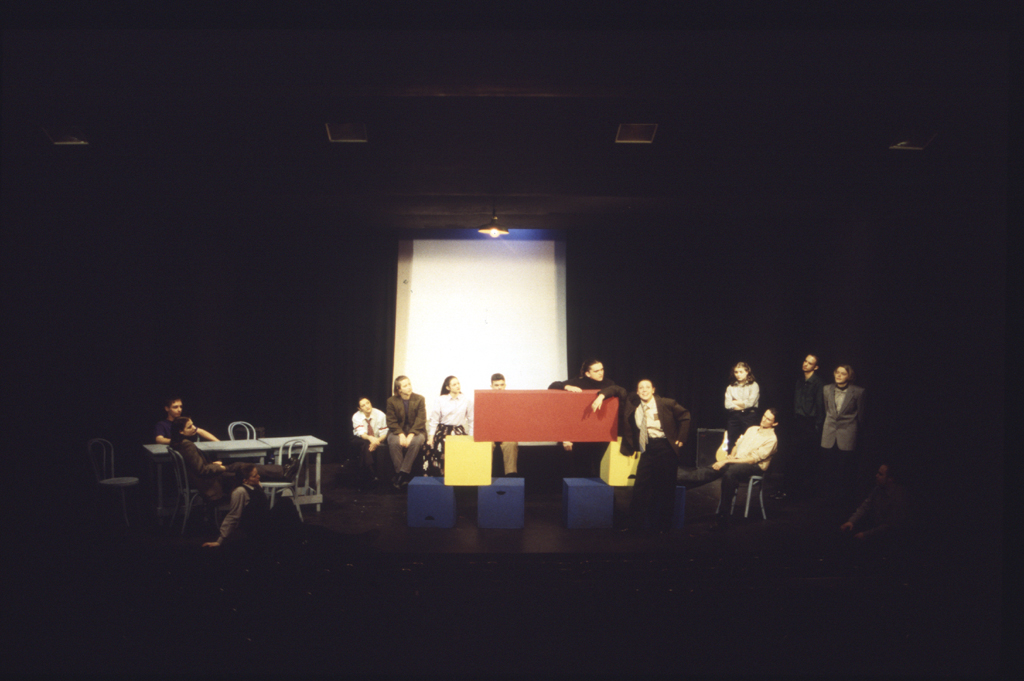
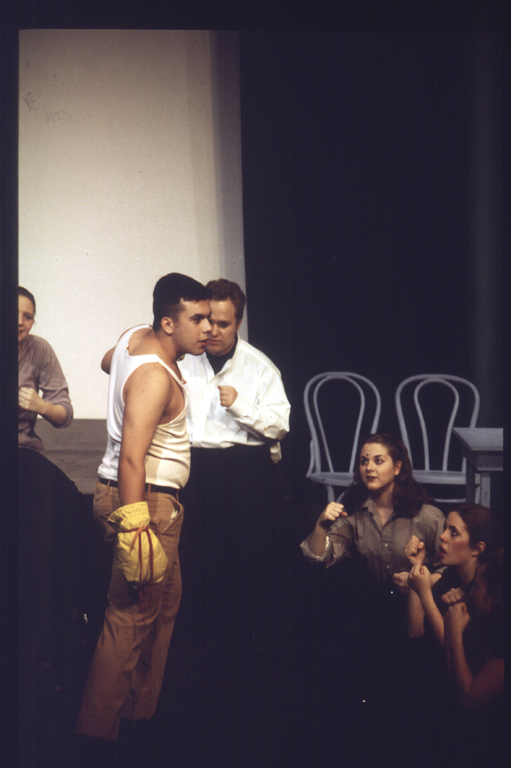
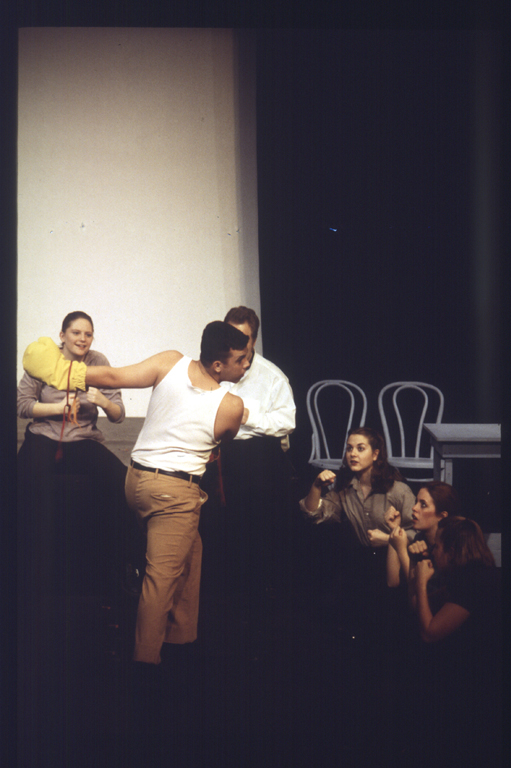
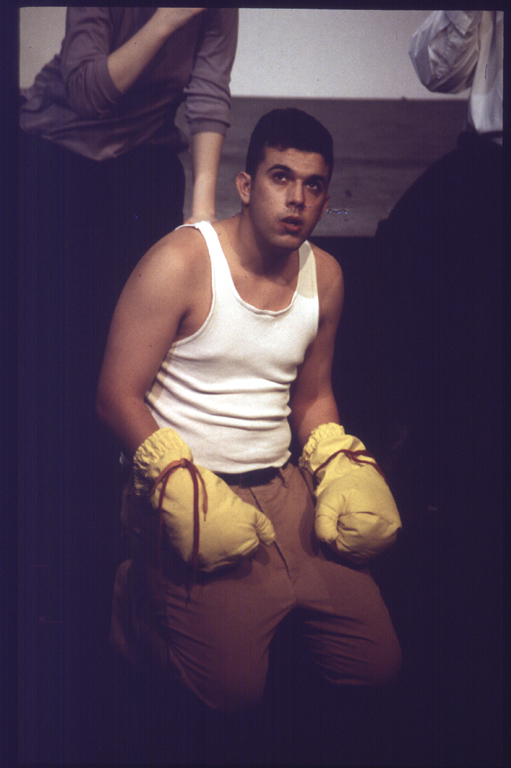
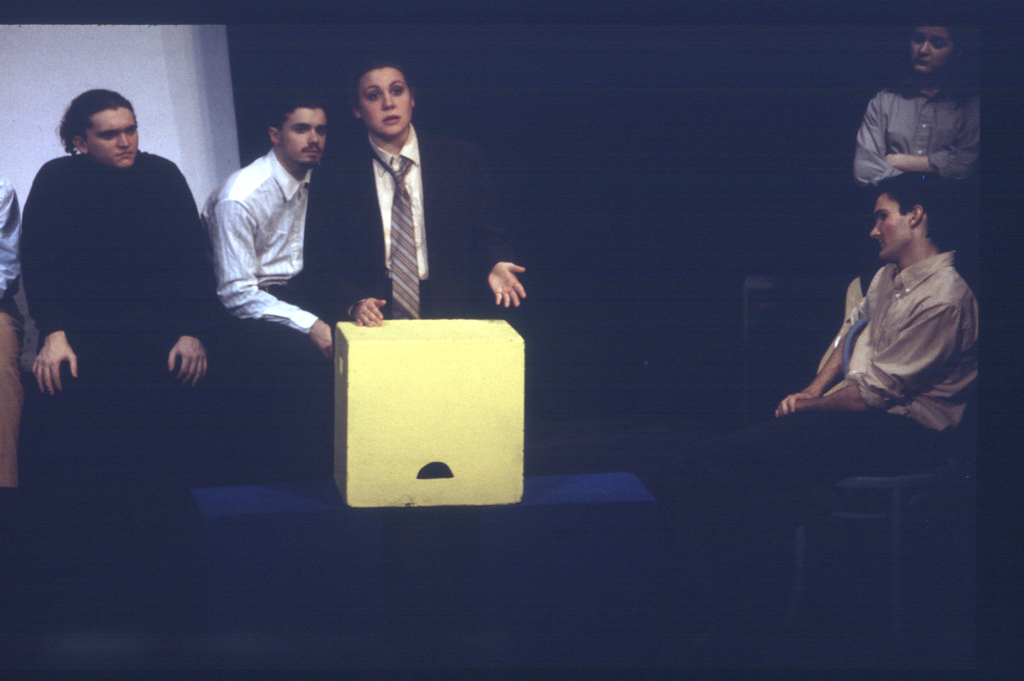
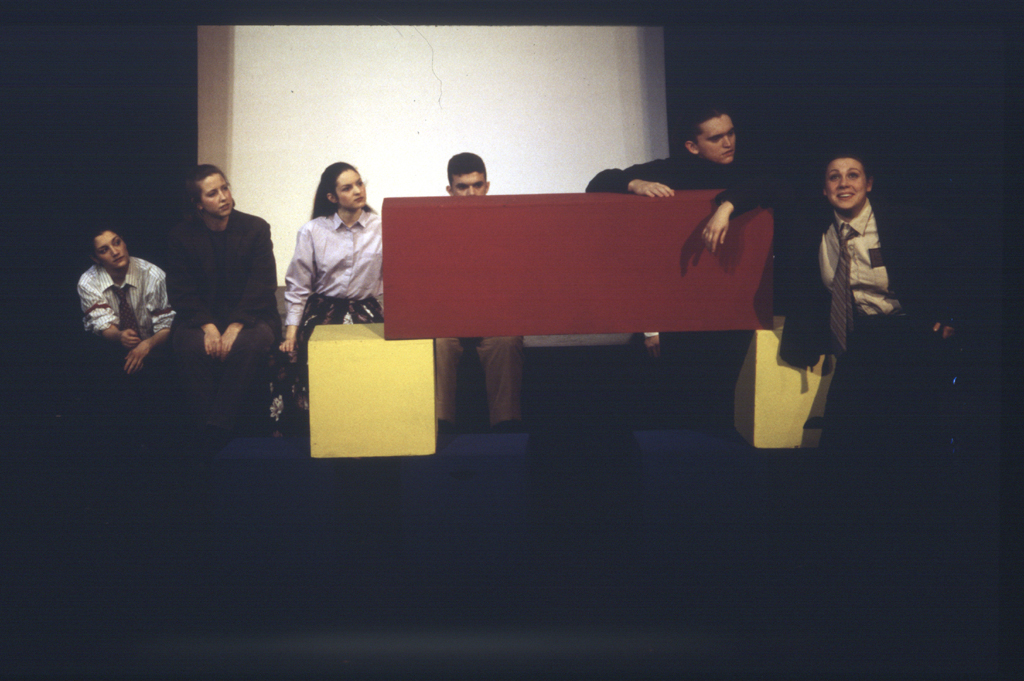
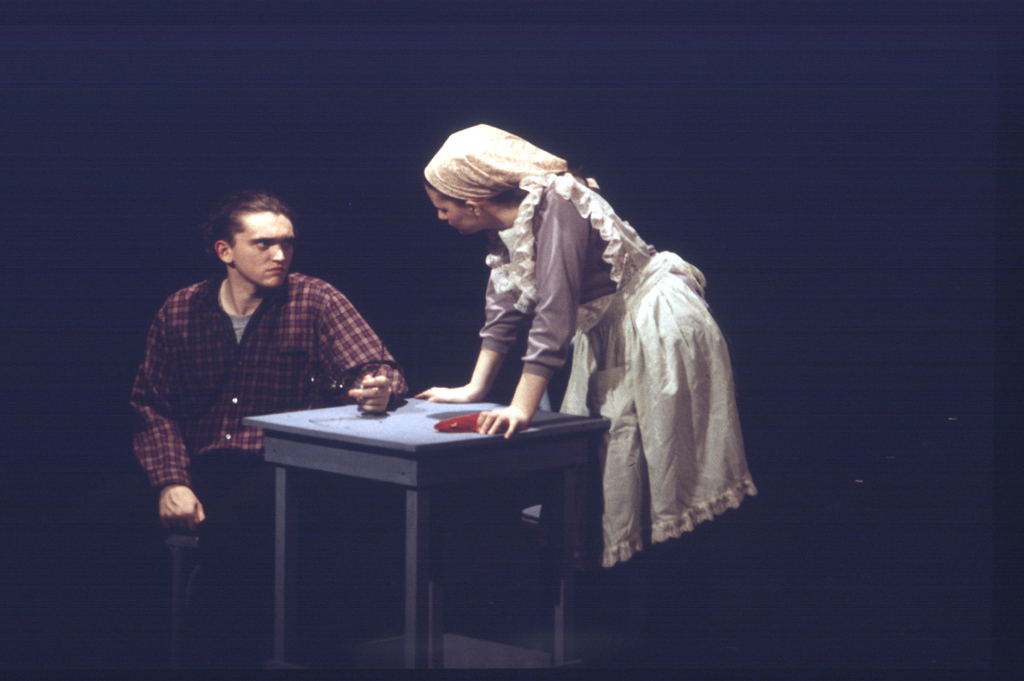
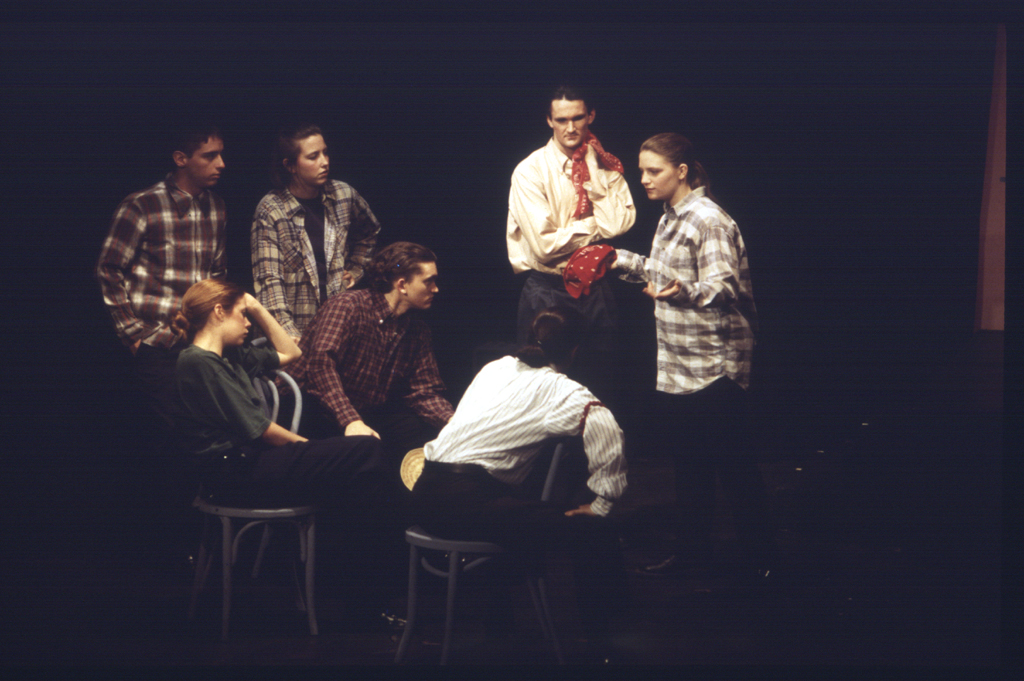
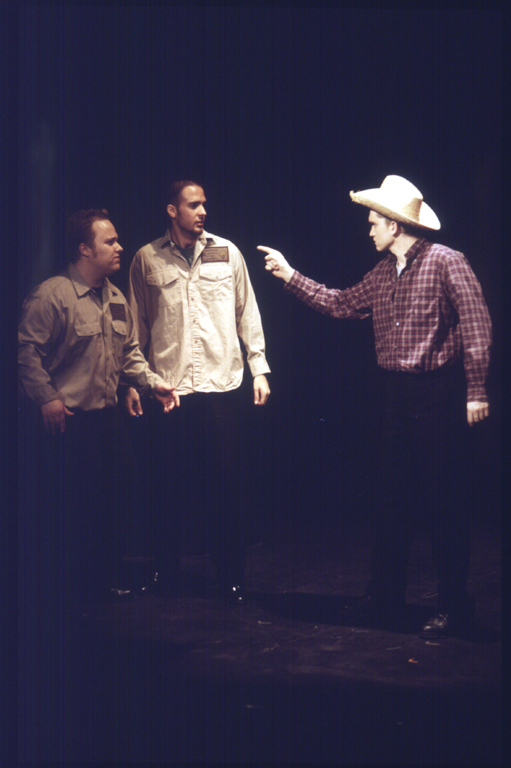
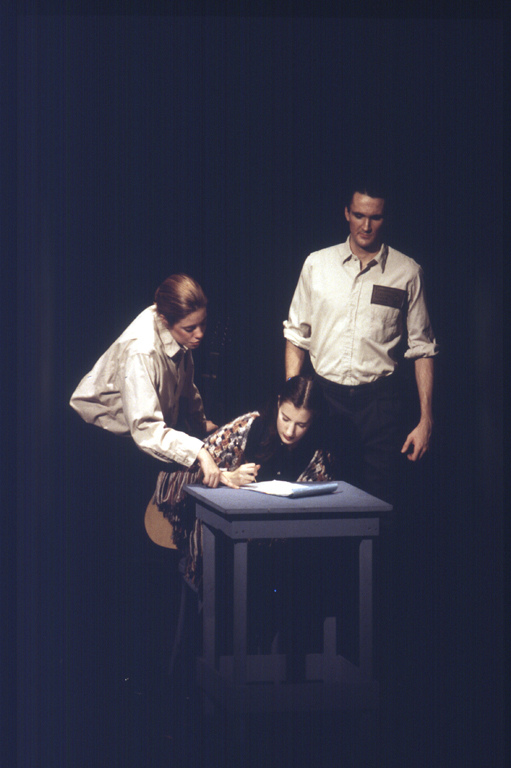
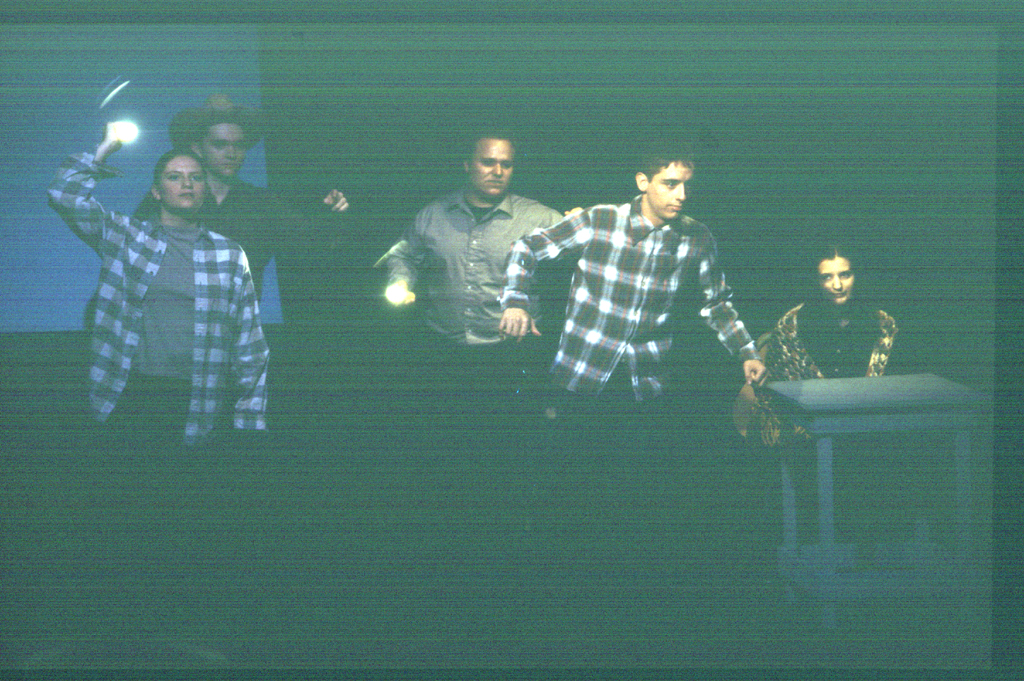
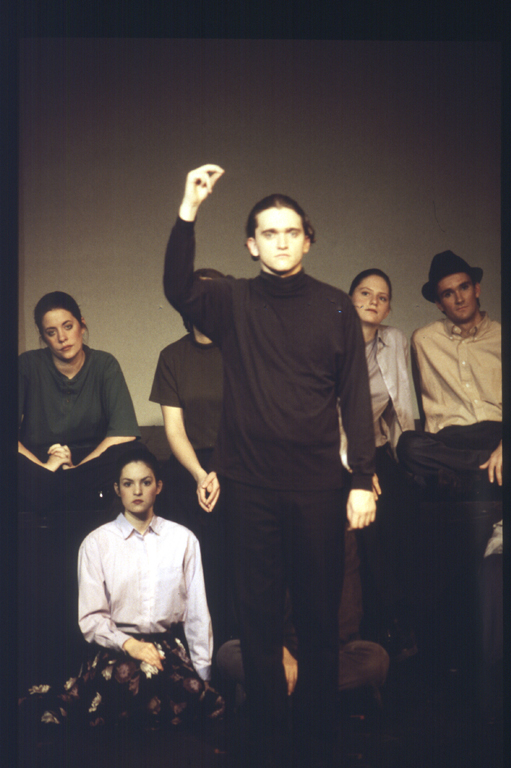
Power: A Federal Theatre Project Living Newspaper was part of the fall 1999 season at Bowling Green State University. The timing was apt: the events leading to the rolling blackouts that hit the western United States in the following months were coming to a head.
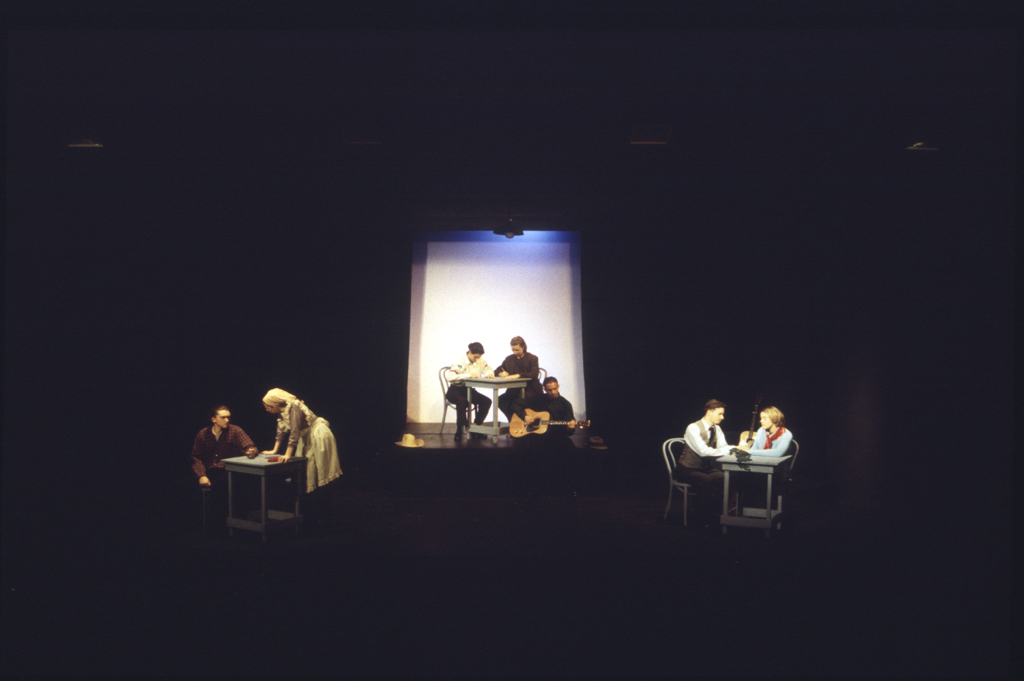
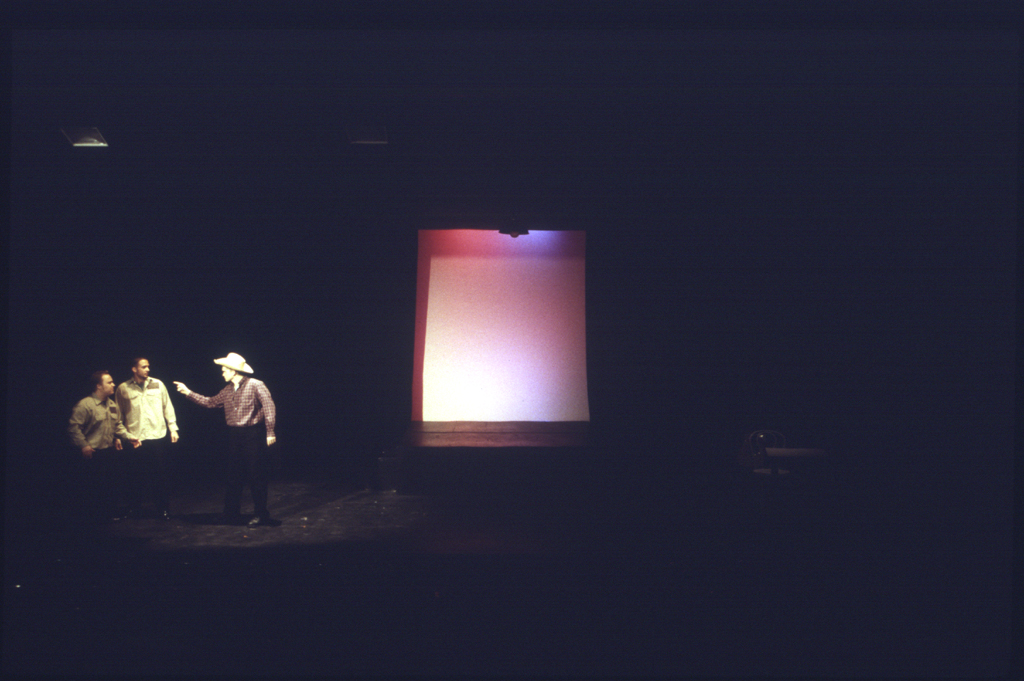
The space shaped the choice. The Joe E. Brown Theatre was a small proscenium house with limited fly space, and the entire budget for shows there was $600. I thought Power would work well with minimal scenery and simple lighting. And although the script calls for more than a hundred performers, I felt it suited a much smaller company; with the early members of the production team I adapted it for an ensemble of about fifteen.
The minimal approach made it critical for the actors to understand and envision the environment of each scene. The exception was the Living Newspaper’s traditional character, the Loudspeaker. I first imagined a performer with or without a microphone, or with a bullhorn like a circus ringmaster, but either would have clashed with the minimalism on stage, and a physical speaker was impractical. Instead the Loudspeaker became a light fixture downstage center, and the cast was encouraged to interact with it as appropriate.
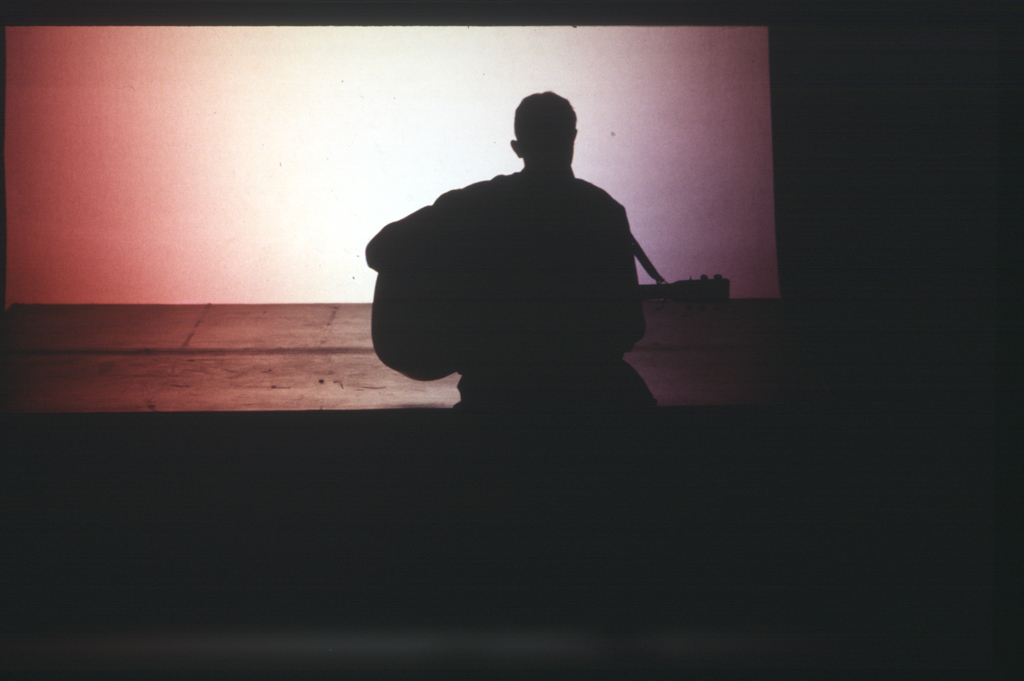
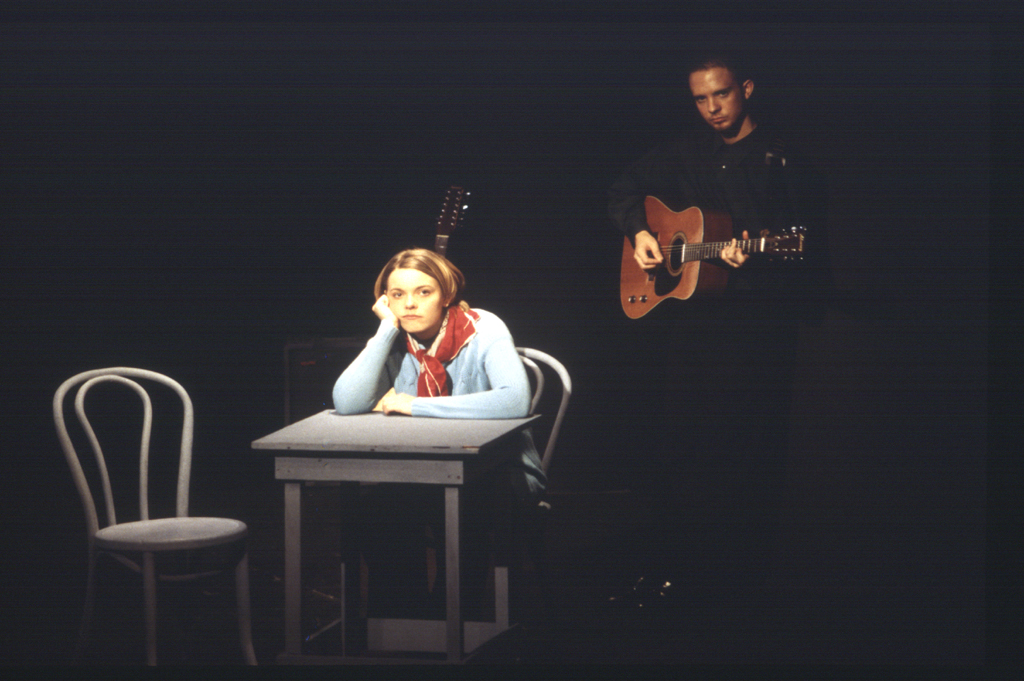
Continuity between scenes was another challenge, with unconventional shifts in time and place. I had planned to use recorded music to establish time and place, but it risked clashing with the minimal set and costumes much as my early ideas for the Loudspeaker had. Casting a very talented guitar player let us use live music instead, which kept the production simple.
Power remains relevant today, as do at least two other Living Newspapers, One Third of a Nation and Spirochete. The trilogy remains on my to-do list.
Director’s Note
What is Power? What is POWER?
On one level, the electrical power presented here can be seen as a metaphor for the power of one person, group or legal entity over others. Electricity is the device through which the play examines the power of a legal monopoly over those it is supposed to serve. That power still exists today and, despite regulation, affects you in many of the same ways depicted here. Unfortunately the opposite is just as true, for Power also presents an unregulated industry providing services that require vast infrastructure. This industry demands a reasonable return on its investments, but it defines reasonable. Even the middle ground of limited regulation is examined, briefly, and with just as poor results. The middle man, Joe Average, our Consumer, is the one who pays the price.
What is the answer? Despite being a government project, the TVA worked. Many of the local power authorities and Rural Electrification Associations born in the same era remain in business today; Bowling Green has a municipal power authority rather than a private corporation. It is unlikely in the extreme, however, that government will enter (or be allowed to enter) the communications business, the cable business, the Internet. Besides, TANSTAAFL: a government with that much power… No, the answer lies in ethics. We must give our children a sound ethical base from which they can make rational decisions for the whole rather than for themselves. There lies the power of the future.
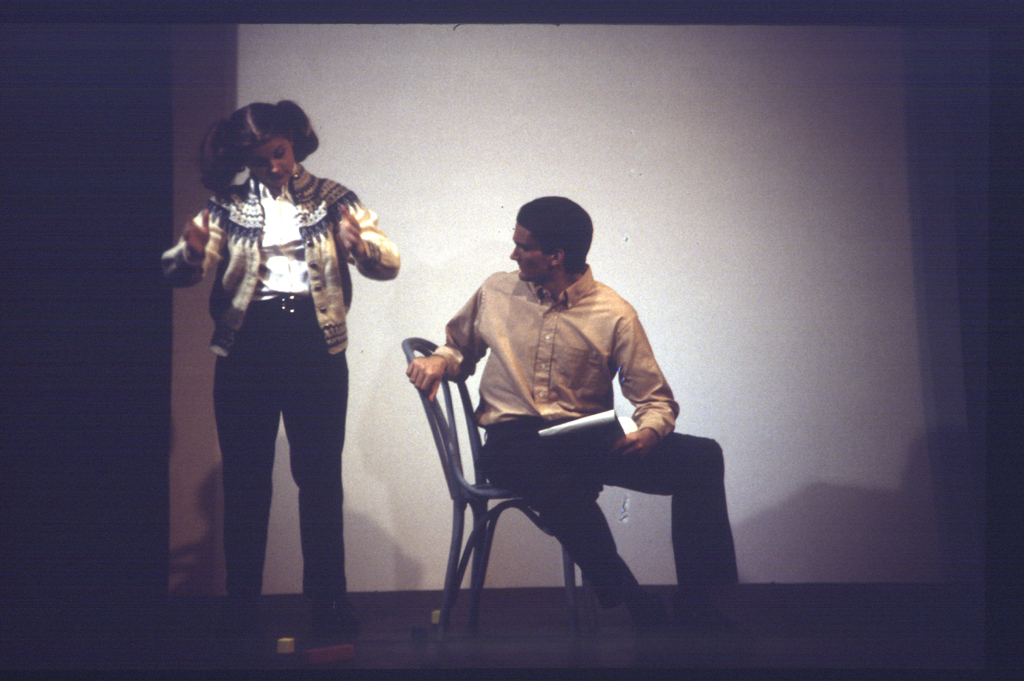
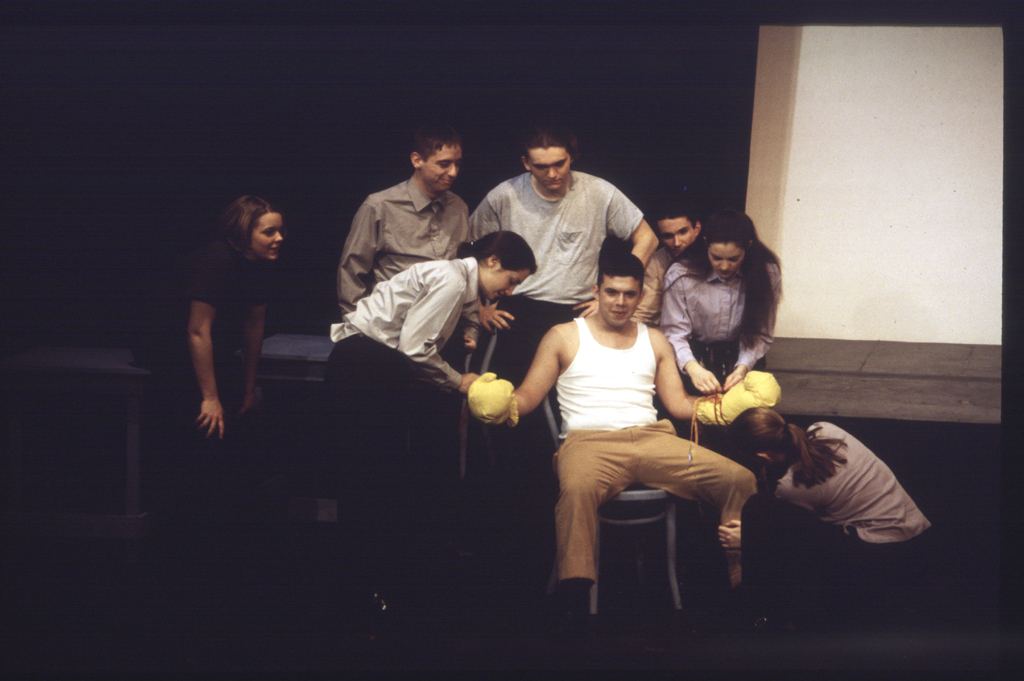
Production Photos